
Hi,
I've added our program committee to this thread, I'll check with them to confirm this as soon as possible.
On Fri, 25 Sep 2026 11:53:34 +0300 openfest--- via Core core@openfest.org wrote:
Dear friends!
While I recognize that your CFP is still open until the 1st of October, November is drawing very close. As an international speaker I need to arrange my flights well ahead of time, and - by the way
- airBaltic flights have very low prices until the end of next week.
:)
I'd appreciate if you'd be able to let me know before or on the 1st of October, if I'm in or not. :)
Kindly Kirils
On 31/07/2026 13:45, OpenFest 2026 wrote:
OpenFest 2026 <https://cfp.openfest.org/openfest-2026/>Your proposal: The Four Horsemen of the Privacy Apocalypse
Hi!
We have received your proposal “The Four Horsemen of the Privacy Apocalypse” to OpenFest 2026. We will notify you once we have had time to consider all proposals, but until then you can see and edit your proposal at https://cfp.openfest.org/openfest-2026/me/submissions/Y8Z7TW/ <https://cfp.openfest.org/ openfest-2026/me/submissions/Y8Z7TW/>.
Please do not hesitate to contact us if you have any questions!
The OpenFest 2026 organisers
Full proposal content:
*Proposal title*: The Four Horsemen of the Privacy Apocalypse
*Abstract*: Privacy in Europe is undergoing a structural shift toward proactive systems of identity verification, communication governance, environmental sensing, and data infrastructure control.
This talk examines four converging mechanisms driving this transition: age verification frameworks that bind access to verified identity; ongoing EU-level proposals around inspection of private encrypted communications under the guise of child safety; expansion of ubiquitous physical-world surveillance through biometric systems, and mobile inference; and the accelerating impact of AI systems that transform public data into inferential and generative models with limited provenance guarantees. Together, these developments suggest a move away from privacy as a default property of digital systems toward privacy as a conditional, regulated state contingent on compliance with layered technical and legal requirements. Using EU policy trajectory as the primary case study, the talk argues that these mechanisms are not isolated policy choices but components of a broader convergence toward an "access-controlled internet," where identity, communication, and content are increasingly mediated by interoperable governance systems rather than open network principles.
*Notes*: 1. Opening - "Nothing to Hide" Revisited a. "If you have nothing to hide, you have nothing to fear" as enduring political slogan b. What changed over the last 8 years? Shift from surveillance debate to access control debate c. Privacy no longer framed as secrecy, but as conditional permission Core thesis: internet is becoming a permission system, not a network
What Privacy Used to Mean a. Autonomy over data processing and interpretation b. Ability to communicate without systemic inspection c. Right to remain untracked in physical and digital space d. Anonymous access as default, not exception
The Structural Shift (2018 -> 2026+) a. From observation (surveillance) to enforcement (compliance) b. From "data collection" to "identity verification" c. From passive tracking to active gatekeeping d. From technical capability to legal obligation
Identity Layer - Age Verification a. UK Online Safety Act enforcing age assurance for access to
content b. EU digital identity frameworks enabling cross-platform verification
* Facial age estimation, ID checks, financial verificationsystems * Anonymous access increasingly treated as risky 4.
Communication Layer - Chat Control
a. EU proposals for scanning private communications, including
encrypted contexts (chat-control) b. "Safety obligations" and Online Safety Bill (so-far failed) attempts to backdoor encrpytion
Environment Layer - Ubiquitous Physical Surveillance a. CCTV + facial, gait recognition expansion in public space b. EU border systems (biometric entry/exit, travel tracking) c. Mobile location inference, telecom metadata, transport,
"smart city" infrastructure linking identity d. Movement data becomes continuous identity signal rather than discrete events
Content Layer - AI Systems and Information Collapse (worldwide) a. Web data ingestion into training pipelines b. Re-identification and inference from aggregated datasets c. Synthetic content flooding original human content in a
self-degrading feedback loop
Unification - The Four-Layer Stack - supported by the EU Data
Act a. Identity: who you are (verification systems) b. Communication: what you say (chat inspection pressure) c. Environment: where you are (sensing systems) d. Content: what is created (AI generation + training loop) e. Data becomes governed infrastructure
Convergence Pattern a. Different legal systems, shared architectural direction b. Regulation drives interoperability of identity systems c. Platform liability shifts enforcement onto infrastructure
providers
Closing - Redefinition of Privacy a. "Nothing to Hide" is now an access requirement b. The internet will become verified, inspectable, and
attributable
*Language*: en
powered by pretalx https://pretalx.com
Core mailing list -- core@openfest.org To unsubscribe send an email to core-leave@openfest.org

Оля,
Първо, по конректния въпрос:
https://pretalx.openfest.org/orga/event/openfest-2026/submissions/Y8Z7TW/rev...
силно 'за', даже смятам добър кандидат за keynote -- някой има ли детайли за самия лектор (дали е гледан как говори)
накратко -- предлагам да му кажем 'да' :)
Второ,
човекът повдига добър въпрос -- с тия *щедри* срокове за cfp, от една страна хората не могат да си запазят полети, от друга страна на pcom нещата са им малко сбити във времето. Предложението ми е за догодина да се помисли тоя cfp да свършва по-рано.
"Ми те всички дават накрая." -- дават накрая, щото така сме ги свикнали :)
И трето, нищо общо с темата, но да вдигна ръка навреме -- ще ми се след като продискутираме, изберем и наредим графика, да прокомуникираме до хералдите тоя график *по минути*.
поздрави, --желин
On Fri, 25 Sep 2026 13:53:14 +0300 Alexander Velin via pcom pcom@openfest.org wrote:
Оля,
Първо, по конректния въпрос:
https://pretalx.openfest.org/orga/event/openfest-2026/submissions/Y8Z7TW/rev...
силно 'за', даже смятам добър кандидат за keynote -- някой има ли детайли за самия лектор (дали е гледан как говори)
накратко -- предлагам да му кажем 'да' :)
Ок, чакам още едно мнение и го маркирам.
Второ,
човекът повдига добър въпрос -- с тия *щедри* срокове за cfp, от една страна хората не могат да си запазят полети, от друга страна на pcom нещата са им малко сбити във времето. Предложението ми е за догодина да се помисли тоя cfp да свършва по-рано.
"Ми те всички дават накрая." -- дават накрая, щото така сме ги свикнали :)
Съгласен съм. От друга страна се опитвам да променя тая реалност в последните години, съвсем неуспешно и малко са ми свършили идеите...
И трето, нищо общо с темата, но да вдигна ръка навреме -- ще ми се след като продискутираме, изберем и наредим графика, да прокомуникираме до хералдите тоя график *по минути*.
OK.
поздрави, --желин
pcom mailing list -- pcom@openfest.org To unsubscribe send an email to pcom-leave@openfest.org

Здравейте,
On Fri, 25 Sept 2026 at 13:53, Alexander Velin via pcom pcom@openfest.org wrote:
Оля,
Първо, по конректния въпрос:
https://pretalx.openfest.org/orga/event/openfest-2026/submissions/Y8Z7TW/rev...
силно 'за', даже смятам добър кандидат за keynote -- някой има ли детайли за самия лектор (дали е гледан как говори)
Kirils Solovjovs многократно е идвал на OpenFest и видеа от неговите презентации са в YouTube:
MITM on PSTN - Kirils Solovjovs OpenFest 2024 https://www.youtube.com/watch?v=ZrJQwG1_oA4
The leak of billions of passwords - Kirils Solovjovs OpenFest 2019 https://www.youtube.com/watch?v=qVOPjzA2feU
Your voice in the government OpenFest 2017 https://youtu.be/IEFL5-A_McA?si=xtg71ChjoBxwxHYM
Сумарно тези три видеа имат 470 гледания в YouTube, така че макар и интересни темите не привличат кой знае колко гледания. Това обаче не е съществено, защото за съжаление по принцип много малко видеа от OpenFest са популярни в YouTube. Сега покрай AI предложението му за "The Four Horsemen of the Privacy Apocalypse" може да привлече по-голям интерес.
накратко -- предлагам да му кажем 'да' :)
Аз също съм за и нямам нищо против. Звучи интересно, но темите, по които говори са малко встрани от моите професионални занимания и не мога да дам оценка.
Поздрави, Леон
Второ,
човекът повдига добър въпрос -- с тия *щедри* срокове за cfp, от една страна хората не могат да си запазят полети, от друга страна на pcom нещата са им малко сбити във времето. Предложението ми е за догодина да се помисли тоя cfp да свършва по-рано.
"Ми те всички дават накрая." -- дават накрая, щото така сме ги свикнали :)
И трето, нищо общо с темата, но да вдигна ръка навреме -- ще ми се след като продискутираме, изберем и наредим графика, да прокомуникираме до хералдите тоя график *по минути*.
поздрави, --желин
pcom mailing list -- pcom@openfest.org To unsubscribe send an email to pcom-leave@openfest.org
Hi,
The team has accepted the talk, I'll update that in the system in a bit.
On Fri, 25 Sep 2026 12:48:51 +0300 Vasil Kolev vasil@ludost.net wrote:
Hi,
I've added our program committee to this thread, I'll check with them to confirm this as soon as possible.
On Fri, 25 Sep 2026 11:53:34 +0300 openfest--- via Core core@openfest.org wrote:
Dear friends!
While I recognize that your CFP is still open until the 1st of October, November is drawing very close. As an international speaker I need to arrange my flights well ahead of time, and - by the way
- airBaltic flights have very low prices until the end of next week.
:)
I'd appreciate if you'd be able to let me know before or on the 1st of October, if I'm in or not. :)
Kindly Kirils
On 31/07/2026 13:45, OpenFest 2026 wrote:
OpenFest 2026 <https://cfp.openfest.org/openfest-2026/>Your proposal: The Four Horsemen of the Privacy Apocalypse
Hi!
We have received your proposal “The Four Horsemen of the Privacy Apocalypse” to OpenFest 2026. We will notify you once we have had time to consider all proposals, but until then you can see and edit your proposal at https://cfp.openfest.org/openfest-2026/me/submissions/Y8Z7TW/ <https://cfp.openfest.org/ openfest-2026/me/submissions/Y8Z7TW/>.
Please do not hesitate to contact us if you have any questions!
The OpenFest 2026 organisers
Full proposal content:
*Proposal title*: The Four Horsemen of the Privacy Apocalypse
*Abstract*: Privacy in Europe is undergoing a structural shift toward proactive systems of identity verification, communication governance, environmental sensing, and data infrastructure control.
This talk examines four converging mechanisms driving this transition: age verification frameworks that bind access to verified identity; ongoing EU-level proposals around inspection of private encrypted communications under the guise of child safety; expansion of ubiquitous physical-world surveillance through biometric systems, and mobile inference; and the accelerating impact of AI systems that transform public data into inferential and generative models with limited provenance guarantees. Together, these developments suggest a move away from privacy as a default property of digital systems toward privacy as a conditional, regulated state contingent on compliance with layered technical and legal requirements. Using EU policy trajectory as the primary case study, the talk argues that these mechanisms are not isolated policy choices but components of a broader convergence toward an "access-controlled internet," where identity, communication, and content are increasingly mediated by interoperable governance systems rather than open network principles.
*Notes*: 1. Opening - "Nothing to Hide" Revisited a. "If you have nothing to hide, you have nothing to fear" as enduring political slogan b. What changed over the last 8 years? Shift from surveillance debate to access control debate c. Privacy no longer framed as secrecy, but as conditional permission Core thesis: internet is becoming a permission system, not a network
What Privacy Used to Mean a. Autonomy over data processing and interpretation b. Ability to communicate without systemic inspection c. Right to remain untracked in physical and digital space d. Anonymous access as default, not exception
The Structural Shift (2018 -> 2026+) a. From observation (surveillance) to enforcement (compliance) b. From "data collection" to "identity verification" c. From passive tracking to active gatekeeping d. From technical capability to legal obligation
Identity Layer - Age Verification a. UK Online Safety Act enforcing age assurance for access to
content b. EU digital identity frameworks enabling cross-platform verification
* Facial age estimation, ID checks, financial verificationsystems * Anonymous access increasingly treated as risky 4.
Communication Layer - Chat Control
a. EU proposals for scanning private communications, including
encrypted contexts (chat-control) b. "Safety obligations" and Online Safety Bill (so-far failed) attempts to backdoor encrpytion
Environment Layer - Ubiquitous Physical Surveillance a. CCTV + facial, gait recognition expansion in public space b. EU border systems (biometric entry/exit, travel tracking) c. Mobile location inference, telecom metadata, transport,
"smart city" infrastructure linking identity d. Movement data becomes continuous identity signal rather than discrete events
Content Layer - AI Systems and Information Collapse
(worldwide) a. Web data ingestion into training pipelines b. Re-identification and inference from aggregated datasets c. Synthetic content flooding original human content in a self-degrading feedback loop
Unification - The Four-Layer Stack - supported by the EU Data
Act a. Identity: who you are (verification systems) b. Communication: what you say (chat inspection pressure) c. Environment: where you are (sensing systems) d. Content: what is created (AI generation + training loop) e. Data becomes governed infrastructure
Convergence Pattern a. Different legal systems, shared architectural direction b. Regulation drives interoperability of identity systems c. Platform liability shifts enforcement onto infrastructure
providers
Closing - Redefinition of Privacy a. "Nothing to Hide" is now an access requirement b. The internet will become verified, inspectable, and
attributable
*Language*: en
powered by pretalx https://pretalx.com
Core mailing list -- core@openfest.org To unsubscribe send an email to core-leave@openfest.org

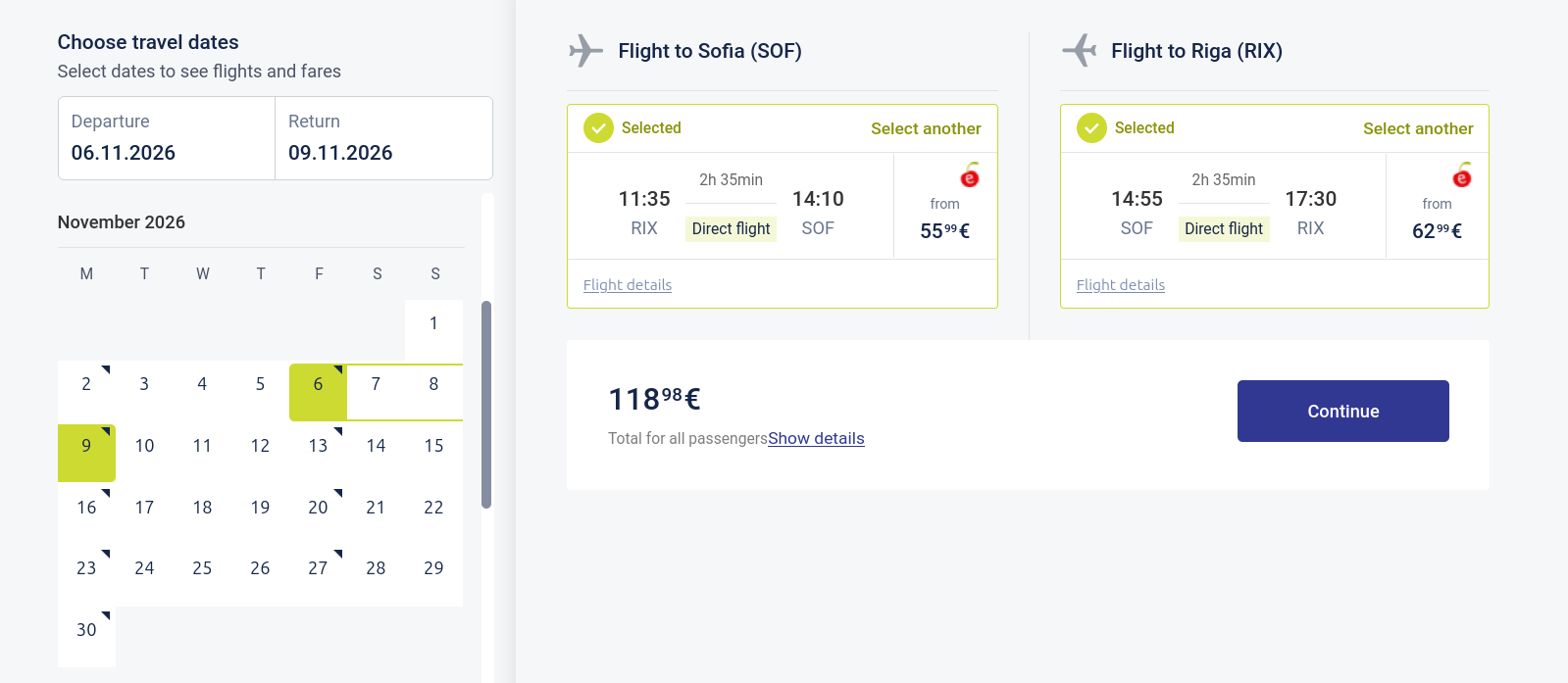
Nice! Thanks a lot!
These flights are currently an option. Please let me know what you think.
Kindly Kirils
On 25/09/2026 15:36, Vasil Kolev wrote:
Hi,
The team has accepted the talk, I'll update that in the system in a bit.
On Fri, 25 Sep 2026 12:48:51 +0300 Vasil Kolev vasil@ludost.net wrote:
Hi,
I've added our program committee to this thread, I'll check with them to confirm this as soon as possible.
On Fri, 25 Sep 2026 11:53:34 +0300 openfest--- via Core core@openfest.org wrote:
Dear friends!
While I recognize that your CFP is still open until the 1st of October, November is drawing very close. As an international speaker I need to arrange my flights well ahead of time, and - by the way
- airBaltic flights have very low prices until the end of next week.
:)
I'd appreciate if you'd be able to let me know before or on the 1st of October, if I'm in or not. :)
Kindly Kirils
On 31/07/2026 13:45, OpenFest 2026 wrote:
OpenFest 2026 <https://cfp.openfest.org/openfest-2026/>Your proposal: The Four Horsemen of the Privacy Apocalypse
Hi!
We have received your proposal “The Four Horsemen of the Privacy Apocalypse” to OpenFest 2026. We will notify you once we have had time to consider all proposals, but until then you can see and edit your proposal at https://cfp.openfest.org/openfest-2026/me/submissions/Y8Z7TW/ <https://cfp.openfest.org/ openfest-2026/me/submissions/Y8Z7TW/>.
Please do not hesitate to contact us if you have any questions!
The OpenFest 2026 organisers
Full proposal content:
*Proposal title*: The Four Horsemen of the Privacy Apocalypse
*Abstract*: Privacy in Europe is undergoing a structural shift toward proactive systems of identity verification, communication governance, environmental sensing, and data infrastructure control.
This talk examines four converging mechanisms driving this transition: age verification frameworks that bind access to verified identity; ongoing EU-level proposals around inspection of private encrypted communications under the guise of child safety; expansion of ubiquitous physical-world surveillance through biometric systems, and mobile inference; and the accelerating impact of AI systems that transform public data into inferential and generative models with limited provenance guarantees. Together, these developments suggest a move away from privacy as a default property of digital systems toward privacy as a conditional, regulated state contingent on compliance with layered technical and legal requirements. Using EU policy trajectory as the primary case study, the talk argues that these mechanisms are not isolated policy choices but components of a broader convergence toward an "access-controlled internet," where identity, communication, and content are increasingly mediated by interoperable governance systems rather than open network principles.
*Notes*: 1. Opening - "Nothing to Hide" Revisited a. "If you have nothing to hide, you have nothing to fear" as enduring political slogan b. What changed over the last 8 years? Shift from surveillance debate to access control debate c. Privacy no longer framed as secrecy, but as conditional permission Core thesis: internet is becoming a permission system, not a network
What Privacy Used to Mean a. Autonomy over data processing and interpretation b. Ability to communicate without systemic inspection c. Right to remain untracked in physical and digital space d. Anonymous access as default, not exception
The Structural Shift (2018 -> 2026+) a. From observation (surveillance) to enforcement (compliance) b. From "data collection" to "identity verification" c. From passive tracking to active gatekeeping d. From technical capability to legal obligation
Identity Layer - Age Verification a. UK Online Safety Act enforcing age assurance for access to
content b. EU digital identity frameworks enabling cross-platform verification
* Facial age estimation, ID checks, financial verificationsystems * Anonymous access increasingly treated as risky 4.
 Communication Layer - Chat Control
 a. EU proposals for scanning private communications, including
encrypted contexts (chat-control) b. "Safety obligations" and Online Safety Bill (so-far failed) attempts to backdoor encrpytion
Environment Layer - Ubiquitous Physical Surveillance a. CCTV + facial, gait recognition expansion in public space b. EU border systems (biometric entry/exit, travel tracking) c. Mobile location inference, telecom metadata, transport,
"smart city" infrastructure linking identity d. Movement data becomes continuous identity signal rather than discrete events
Content Layer - AI Systems and Information Collapse
(worldwide) a. Web data ingestion into training pipelines b. Re-identification and inference from aggregated datasets c. Synthetic content flooding original human content in a self-degrading feedback loop
Unification - The Four-Layer Stack - supported by the EU Data
Act a. Identity: who you are (verification systems) b. Communication: what you say (chat inspection pressure) c. Environment: where you are (sensing systems) d. Content: what is created (AI generation + training loop) e. Data becomes governed infrastructure
Convergence Pattern a. Different legal systems, shared architectural direction b. Regulation drives interoperability of identity systems c. Platform liability shifts enforcement onto infrastructure
providers
Closing - Redefinition of Privacy a. "Nothing to Hide" is now an access requirement b. The internet will become verified, inspectable, and
attributable
*Language*: en
powered by pretalx https://pretalx.com
Core mailing list -- core@openfest.org To unsubscribe send an email to core-leave@openfest.org
Thank you!
Your fast response is much appreciated.
Kirils
On 25/09/2026 12:48, Vasil Kolev wrote:
Hi,
I've added our program committee to this thread, I'll check with them to confirm this as soon as possible.
On Fri, 25 Sep 2026 11:53:34 +0300 openfest--- via Core core@openfest.org wrote:
Dear friends!
While I recognize that your CFP is still open until the 1st of October, November is drawing very close. As an international speaker I need to arrange my flights well ahead of time, and - by the way
- airBaltic flights have very low prices until the end of next week.
:)
I'd appreciate if you'd be able to let me know before or on the 1st of October, if I'm in or not. :)
Kindly Kirils
On 31/07/2026 13:45, OpenFest 2026 wrote:
OpenFest 2026 <https://cfp.openfest.org/openfest-2026/>Your proposal: The Four Horsemen of the Privacy Apocalypse
Hi!
We have received your proposal “The Four Horsemen of the Privacy Apocalypse” to OpenFest 2026. We will notify you once we have had time to consider all proposals, but until then you can see and edit your proposal at https://cfp.openfest.org/openfest-2026/me/submissions/Y8Z7TW/ <https://cfp.openfest.org/ openfest-2026/me/submissions/Y8Z7TW/>.
Please do not hesitate to contact us if you have any questions!
The OpenFest 2026 organisers
Full proposal content:
*Proposal title*: The Four Horsemen of the Privacy Apocalypse
*Abstract*: Privacy in Europe is undergoing a structural shift toward proactive systems of identity verification, communication governance, environmental sensing, and data infrastructure control.
This talk examines four converging mechanisms driving this transition: age verification frameworks that bind access to verified identity; ongoing EU-level proposals around inspection of private encrypted communications under the guise of child safety; expansion of ubiquitous physical-world surveillance through biometric systems, and mobile inference; and the accelerating impact of AI systems that transform public data into inferential and generative models with limited provenance guarantees. Together, these developments suggest a move away from privacy as a default property of digital systems toward privacy as a conditional, regulated state contingent on compliance with layered technical and legal requirements. Using EU policy trajectory as the primary case study, the talk argues that these mechanisms are not isolated policy choices but components of a broader convergence toward an "access-controlled internet," where identity, communication, and content are increasingly mediated by interoperable governance systems rather than open network principles.
*Notes*: 1. Opening - "Nothing to Hide" Revisited a. "If you have nothing to hide, you have nothing to fear" as enduring political slogan b. What changed over the last 8 years? Shift from surveillance debate to access control debate c. Privacy no longer framed as secrecy, but as conditional permission Core thesis: internet is becoming a permission system, not a network
What Privacy Used to Mean a. Autonomy over data processing and interpretation b. Ability to communicate without systemic inspection c. Right to remain untracked in physical and digital space d. Anonymous access as default, not exception
The Structural Shift (2018 -> 2026+) a. From observation (surveillance) to enforcement (compliance) b. From "data collection" to "identity verification" c. From passive tracking to active gatekeeping d. From technical capability to legal obligation
Identity Layer - Age Verification a. UK Online Safety Act enforcing age assurance for access to
content b. EU digital identity frameworks enabling cross-platform verification
* Facial age estimation, ID checks, financial verificationsystems * Anonymous access increasingly treated as risky 4.
 Communication Layer - Chat Control
 a. EU proposals for scanning private communications, including
encrypted contexts (chat-control) b. "Safety obligations" and Online Safety Bill (so-far failed) attempts to backdoor encrpytion
Environment Layer - Ubiquitous Physical Surveillance a. CCTV + facial, gait recognition expansion in public space b. EU border systems (biometric entry/exit, travel tracking) c. Mobile location inference, telecom metadata, transport,
"smart city" infrastructure linking identity d. Movement data becomes continuous identity signal rather than discrete events
Content Layer - AI Systems and Information Collapse (worldwide) a. Web data ingestion into training pipelines b. Re-identification and inference from aggregated datasets c. Synthetic content flooding original human content in a
self-degrading feedback loop
Unification - The Four-Layer Stack - supported by the EU Data
Act a. Identity: who you are (verification systems) b. Communication: what you say (chat inspection pressure) c. Environment: where you are (sensing systems) d. Content: what is created (AI generation + training loop) e. Data becomes governed infrastructure
Convergence Pattern a. Different legal systems, shared architectural direction b. Regulation drives interoperability of identity systems c. Platform liability shifts enforcement onto infrastructure
providers
Closing - Redefinition of Privacy a. "Nothing to Hide" is now an access requirement b. The internet will become verified, inspectable, and
attributable
*Language*: en
powered by pretalx https://pretalx.com
Core mailing list -- core@openfest.org To unsubscribe send an email to core-leave@openfest.org
-
 Alexander Velin
 -
 Leon Anavi
 -
 openfest@kirils.org
 -
 Vasil Kolev